Name Seven Characteristics That Can Be Used to Describe Minerals
1 Calcium 2 Chloride 3 Magnesium 4 Phosphorus. Color Crystal Form Luster Hardness Streak Cleavage Fracture.
Physical Properties Of Minerals Laboratory Manual For Earth Science
Color and luster describe the minerals outer appearance.

. Name six physical characteristics that are used to identify. Each mineral will scratch all that precedeit and be scratched by all that follow it. Fracture The way a mineral looks when it breaks apart in an irregular way specific gravity.
The Mohs scale is as follows. What are the characteristics of minerals. Wilson Rent Buy.
What are the seven major macrominerals. Hardness The ability to resist being scratchedor hardnessis one of the most useful properties for identifying minerals. Color and density are determined primarily by the chemical composition.
Crystal habit lustre hardness cleavage break colour line and specific gravity. Seven characteristics of minerals include streak luster color and cleavage. List each specimen within your collection and assign each a unique number.
A mineral may have good cleavage in one or two directions but fracture in another direction. Fracture is breakage that is not flat and there are two types. Color streak hardness luster diaphaneity specific gravity cleavage fracture magnetism solubility and many more.
Test Your Knowledge On Mineral Resources. Hardness the resistance of a mineral to being scratched cleavage A minerals ability to split easily along flat surfaces. The Mohs scale is a set of 10 common minerals chosen for comparative hardness.
An Introduction to Physical Science 13th Edition Edit edition Solutions for Chapter 22 Problem 6SAQ. Minerals are classified on the basis. Some minerals have unusual properties that can be used for identification.
Up to 24 cash back The mineral or rock must have straight edges flat sides and regular angles. Property Description Example of Mineral. 40 Common Minerals and.
- Cleavage and fracture Cleavage is a way the mineral breaks and fracture is a breakage is rough and has jagged edges. Mineral is attracted to a magnet. The shape of a mineral based on the arrangement of atoms.
Was not import reliant in 2016. What is the most common mineral found in the human body. A mineral is an inorganic solid naturally occurring with a characteristic chemical composition distinctive phusical properties and crystalline structure.
The minerals are arranged in order of increasing hardness. Minerals are identified with eight main properties. The hardness of a mineral can be measured by its resistance to scratching or abrasion.
Color hardness luster crystal forms density and cleavage. Mineral gives off radiation that can be measured with Geiger counter. The number of planes on which a mineral breaks naturally.
Terms in this set 7 Crystal Family. Bentonite is used for drilling mud pet waste absorbent iron ore pelletizing and foundry sand bond. Conchoidal shell-shaped as in quartz and uneven.
Mineral glows under ultraviolet light. Streak is the color of the powder. Minerals can be identified by their characteristic physical properties such as crystalline structure hardness streaking and cleavage.
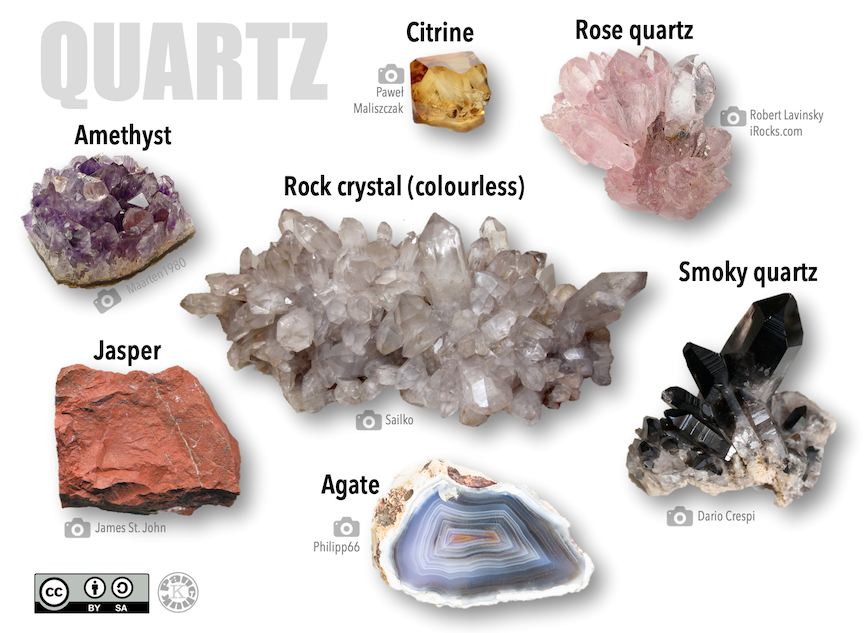
The amethyst shown here is an excellent example of. These physical properties are useful for identifying minerals. Metallic minerals may have a hackly jagged fracture.
All specimens should be labeled with basic descriptive information. Calcium is the most common mineral in the human body accounting for between 15 and 2 percent of the overall body weight. Three other characteristics of minerals are fracture hardness and crystal form.
Kaolin is used for paper coating and filling refractory products fiberglass paint rubber and catalyst manufacture. Properties that help geologists identify a mineral in a rock are. As your collection grows you may want to consider setting up a system of cataloging.
Crystal form cleavage and hardness are determined primarily by the crystal structure at the atomic level. Minerals have distinctive properties that can be used to help identify them. Minerals may also be described as glassy or vitreous silky waxy or resinous among other things.
Cleavage can also be described as perfect good or poor. Name the seven common properties to identify minerals. What are the two categories of minerals.
Common clay is used in brick light aggregate and cement. Cleavage or the characteristic way a mineral breaks depends on the crystal structure of the mineral. Luster Term used to describe how a mineral reflects light from its surface streak color of a mineral when it is in powdered form.
There is usually no specific diagnostic property that can be used to classify a mineral sample on its own. MicromineralsTrace - Minerals where you need to consume less than 100mg or less a day. MacromineralsMajor - Minerals where you need to consume 100mg or more a day.
Metallic minerals are usually opaque but non-metallics can be opaque translucent or transparent. Using Characteristics of Minerals to Identify Them Most minerals can be characterized and classified by their unique physical properties. Hardness The mohs hardness scale Lustre.
Keeping good records is an important part of building a rock and mineral collection. Mohs Hardness Scale is used to compare the hardness of minerals. Hardness luster color streak specific gravity cleavage fracture and tenacity.
Charles A Higgins James T. 7 ways to identify minerals STUDY Flashcards Learn Write Spell Test PLAY Match Gravity Created by emouton22 Terms in this set 7 color the color the rock has Streak Luster The way light. - Streak Streak refers to the colour pouder that the mineral leaves after it scratches it.

10 Physical Characteristics Properties Of Minerals Youtube

Characteristics Of Minerals Ppt Download
10 Physical Characteristics Properties Of Minerals Youtube

Comments
Post a Comment